 Sellka
How to keep records in a shop
Good records answer three questions any day you ask them: what did the shop make, who owes it money, and what is about to run out. A shop that can answer those knows whether it is growing, and can show a bank or a supplier that it is.
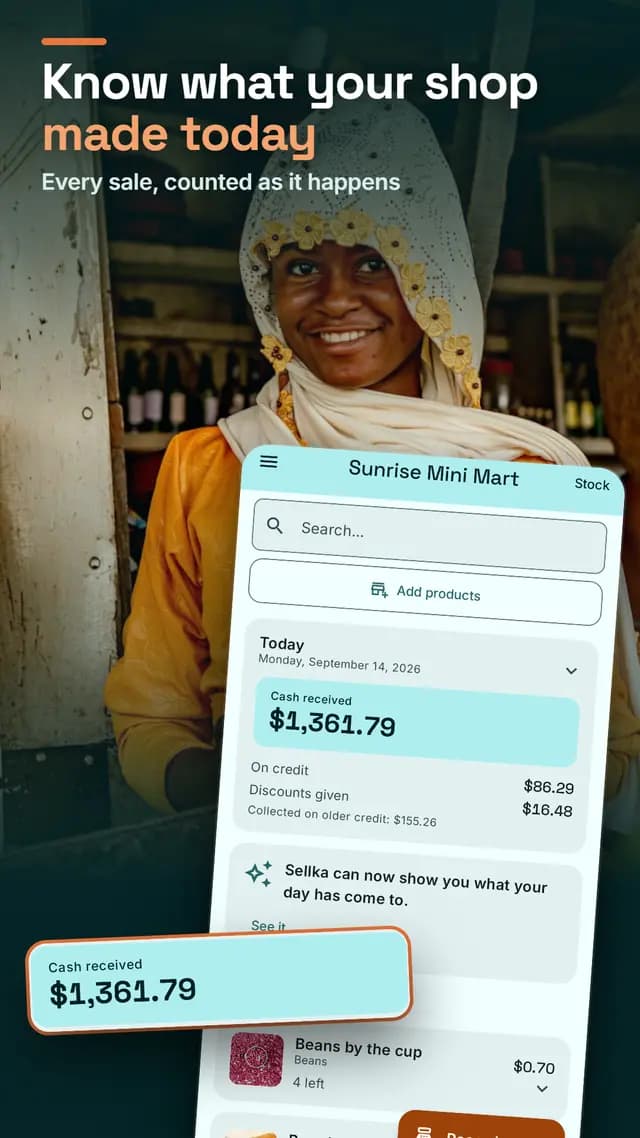
This guide is written for one small shop with one counter. It works in a book, and it works on a phone.
The five records every small shop needs
- Sales. Every sale: what went out, how many, at what price, and whether it was paid in cash or on credit.
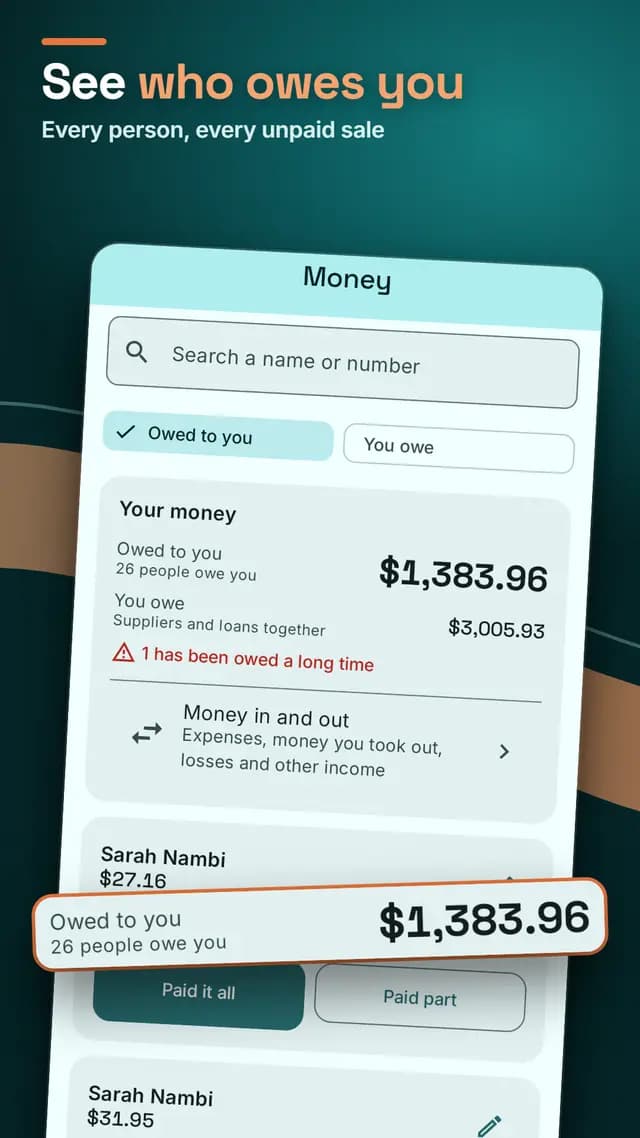
- Who owes you. Every customer who took goods on credit, how much, since when, and each payment they make.
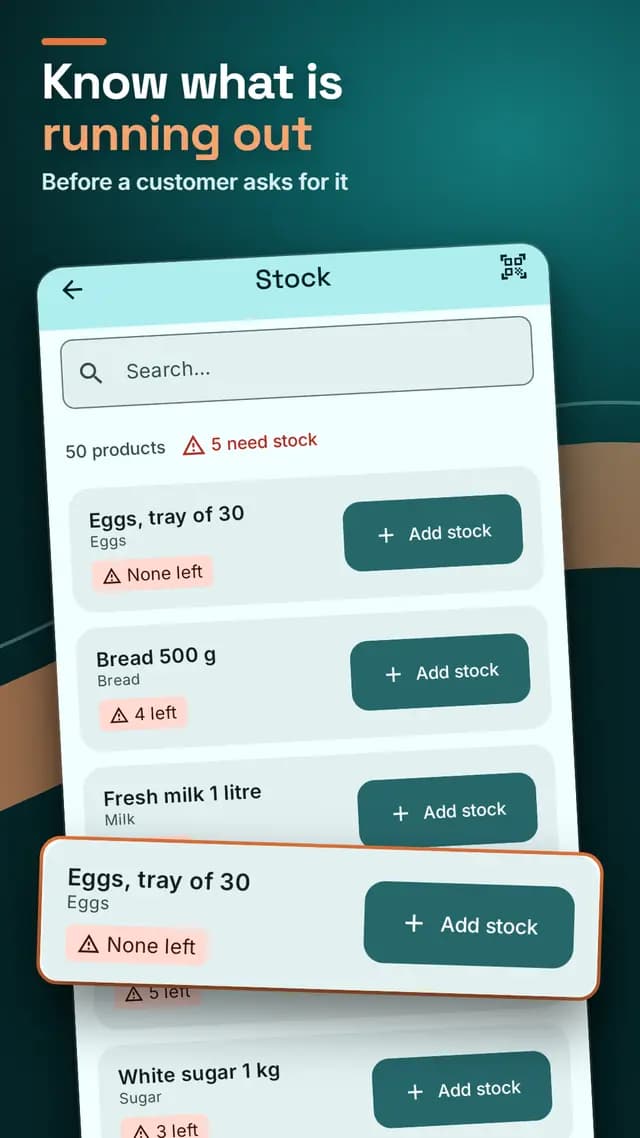
- Stock. How many of each product you have, what came in, and what went out.
- What you owe. Each supplier who delivered goods you have not paid for in full.
- Money in and out. Rent, transport, airtime, wages and every other cost of keeping the shop open, money you took for yourself, and any loan.
And one figure that most shops never write down: what each product cost you to buy. Without it you know what you sold but not what you kept.
Keeping them in a book
Give each record its own pages: a sales page for every day, a credit page for each customer, a stock page for each product. Write each sale at the moment it happens, not from memory at night. At the end of the day, add the sales, count the cash, and see if they agree.
A book costs almost nothing and never needs charging. It also takes an evening to add up, cannot warn you before a product runs out, and cannot be copied if it gets wet or lost.
Keeping them in a spreadsheet
A spreadsheet adds up for you, and there are good templates for a daily sales record or a stock sheet. It needs a computer or a lot of patience on a phone, it does not take stock off when you sell, and a formula typed wrong gives a wrong total with nothing to say so.
Keeping them on your phone with Sellka
Sellka keeps all five records, and the adding up is done as you go:
- Sales: tap Record a sale, choose the products or scan their barcodes, take the money. Daily sales record.
- Who owes you: a credit sale goes onto the customer's name, with their phone number. Credit book.
- Stock: every sale takes its goods off, every delivery adds them back, and Sellka warns you before a product runs out. Stock taking.
- What you owe: one total per supplier, however many deliveries.
- Money in and out: each cost on the day you paid it, kept apart from sales. Cash book.
Enter what each product costs you, and Sellka shows what you kept on every sale. How to work out what your shop makes.
It works with no internet and no account, and your records stay on your phone.
Watch a whole shop day recorded on a phone, in five minutes

A habit that makes any record work
Record at the moment it happens. A sale written down later is a sale that is sometimes forgotten, and a credit sale that is forgotten is money that never comes back. Whatever you use, the habit is the same.
Questions

© 2026 The NextTechTitan Team. Google Play and the Google Play logo are trademarks of Google LLC.