 Sellka
Money in and out
A shop's cash book records every shilling, naira or cedi that comes in and goes out. In Sellka, sales are recorded at the counter, and everything else that moves money is kept under Money, each kind apart, so what the shop earned is never overstated.
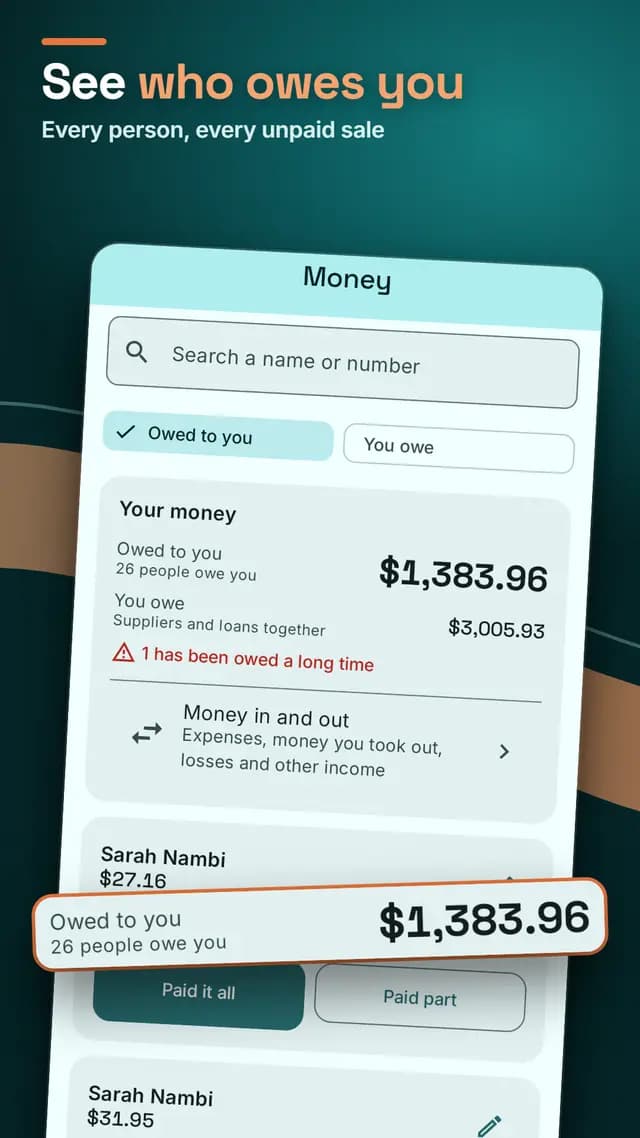
What people owe you
Money lists everyone who owes you, how much, and for how long. When they pay, tap Paid it all or Paid part on their name. Their balance goes down by that amount. A payment on an old debt is not a new sale. More about the credit book.
What you owe a supplier
What you owe each supplier is one total, however many deliveries they bring.
When goods arrive and you have not paid in full, open Money, tap You owe, then Record a delivery. Enter who brought them, what you paid and what you still owe. Each new delivery adds to the total. You can also add the supplier when you add stock. When you pay them, tap Paid it all or Paid part there. The oldest bill is cleared first.
Paying a supplier is not a trading cost. The cost of goods is counted when each one sells.
Money you spent on the shop
Rent, transport, airtime, wages, power, repairs, packaging. Any cost of keeping the shop open. Open the menu, tap Money in and out, then Add an entry and choose Shop expense, on the day you paid it.
Do not add the goods you sell here. Their cost is counted when each one sells.
Money you took for yourself
Money you take from the shop for yourself is not a shop cost. Add it under Money in and out as Money you took out. Sellka records it but leaves it out of what the shop earned. Reports show it separately and say why.
Money that came in another way
Money the shop got without selling goods, like a supplier rebate, a commission, or rent. Add it under Money in and out as Other income. It is kept apart from sales so your trading is not overstated.
Money the shop borrowed
A loan is not earnings, and repaying it is not a cost. Open the menu, tap Loans you took, then Add a loan, with the lender and when you will repay. If you pay interest, add the interest as a shop expense. That part is a real cost.
Questions

© 2026 The NextTechTitan Team. Google Play and the Google Play logo are trademarks of Google LLC.